
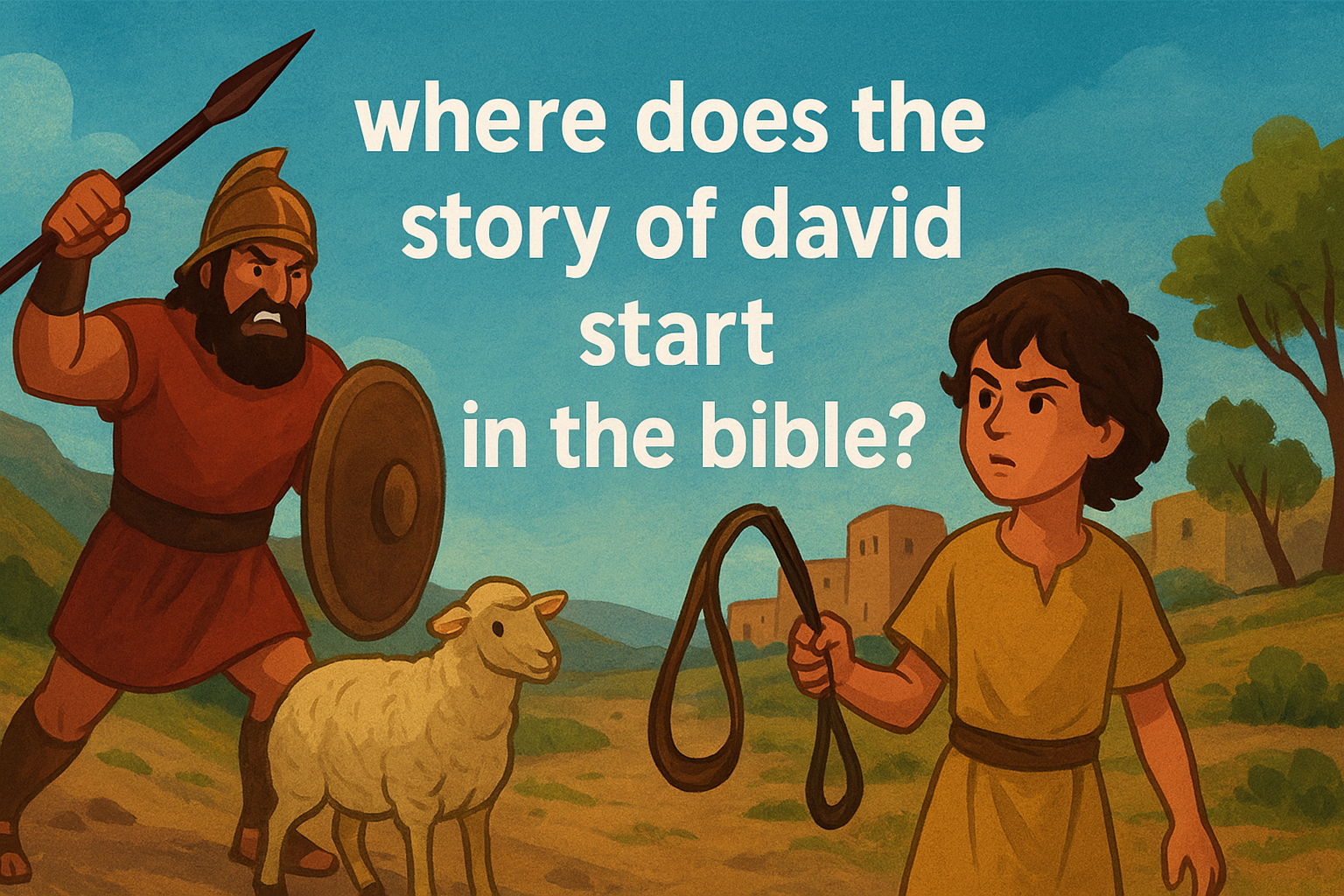
The story of David is one of the most compelling narratives in the Bible, showcasing themes of faith, leadership, and the complexities of human nature. From his humble beginnings as a shepherd to becoming the king of Israel, David’s life is rich with lessons and insights. Understanding where his story begins helps us appreciate the context and significance of his journey.
The story of David starts in the book of 1 Samuel, specifically in chapter 16. This chapter marks a pivotal moment in Israel’s history, as it details the anointing of David by the prophet Samuel, chosen by God to replace King Saul. David’s journey unfolds from this point, revealing not only his rise to prominence but also the challenges he faces along the way.
The Context of 1 Samuel
To grasp the significance of David’s story, it is essential to understand the context in which it takes place. The book of 1 Samuel narrates the transition of Israel from a confederation of tribes led by judges to a united monarchy. The people of Israel demand a king, desiring to be like other nations. This request displeases God, who appoints Saul as the first king of Israel. However, Saul’s disobedience leads to God’s rejection of him as king, setting the stage for David’s anointing.
The Anointing of David
In 1 Samuel 16, God instructs Samuel to anoint a new king from the sons of Jesse, a man from Bethlehem. Samuel arrives in Bethlehem, where he meets Jesse and his sons. Initially, Samuel assumes that Eliab, the eldest son, is the chosen one due to his impressive appearance. However, God reveals to Samuel, “Do not consider his appearance or his height, for I have rejected him. The Lord does not look at the things people look at. People look at the outward appearance, but the Lord looks at the heart” (1 Samuel
The Early Life of David
David’s early life as a shepherd is significant in understanding his character and leadership qualities. While tending to his father’s sheep, he developed skills that would serve him well in his later role as king. The solitude of the fields allowed him to cultivate a deep relationship with God, which is reflected in the Psalms he would later write.
For instance, Psalm 23, which begins with “The Lord is my shepherd,” shows that David not only understood the responsibilities of a shepherd but also recognized God as the ultimate caretaker of his life. This foundational relationship with God would guide David throughout his tumultuous journey.
David and Goliath: A Defining Moment
One of the most famous stories in David’s life is his encounter with Goliath, detailed in 1 Samuel 17. This event is not just a tale of bravery; it encapsulates David’s faith in God and his understanding of divine support. When the Israelite army was paralyzed by fear, David volunteered to confront the giant, armed only with a sling and five stones.
His declaration before the battle, “You come against me with sword and spear, but I come against you in the name of the Lord Almighty,” highlights his reliance on God rather than on physical strength or weaponry. This story serves as a profound lesson about faith, courage, and the belief that God can deliver His people against insurmountable odds.
The Relationship Between David and Saul
David’s relationship with King Saul is complex and evolves significantly throughout the narrative. Initially, Saul recognizes David’s talents and brings him into his court, where David plays the harp to soothe Saul’s troubled spirit. However, as David’s popularity grows, Saul becomes increasingly jealous and perceives him as a threat to his throne.
This jealousy culminates in multiple attempts on David’s life, forcing David to flee and live as a fugitive. Despite the persecution, David respects Saul as the anointed king and refrains from harming him, demonstrating his integrity and commitment to God’s will. This tension between them highlights the themes of loyalty, jealousy, and the consequences of disobedience to God.
David’s Leadership and Kingship
David’s eventual ascension to the throne is marked by significant events, including the unification of Israel and the establishment of Jerusalem as the capital. His reign is characterized by military victories, territorial expansion, and the establishment of a central worship site for the Israelites, the Ark of the Covenant.
However, David’s kingship is not without its failures. His sin with Bathsheba and the subsequent consequences illustrate the profound moral and ethical challenges leaders face. This incident leads to personal and familial turmoil, showcasing that even a man after God’s own heart is susceptible to sin and its repercussions.
The Legacy of David
David’s legacy extends beyond his lifetime. He is often regarded as Israel’s greatest king, and his lineage is of profound significance in biblical prophecy, particularly concerning the Messiah. Jesus is referred to as the “Son of David,” linking the New Testament to the Old Testament promises made to David.
Moreover, the Psalms, many of which are attributed to David, continue to inspire and guide believers. They reflect a range of human emotions and experiences, from despair to joy, and provide a template for prayer and worship. David’s life is a testament to the enduring relationship between God and humanity, marked by both triumphs and failures.
Questions for Reflection
As we consider the story of David, several questions arise that can deepen our understanding and application of his life lessons:
- What can we learn from David’s faith when faced with overwhelming challenges, like Goliath?
- How does David’s respect for Saul, despite personal danger, challenge our views on authority and leadership?
- In what ways does David’s relationship with God inform our own spiritual journey?
- What lessons can we draw from David’s failures and their consequences in our lives today?
Conclusion: The Enduring Story of David
The story of David, beginning in 1 Samuel, encapsulates a rich tapestry of faith, leadership, and human experience. From his humble beginnings as a shepherd to his complexities as a king, David’s life offers timeless lessons that resonate with believers today. His narrative reminds us of the importance of a heart aligned with God, the power of faith in action, and the grace that accompanies repentance. As we reflect on David’s journey, we are invited to explore our own paths in light of his example and to seek a deeper relationship with God in every season of life.