
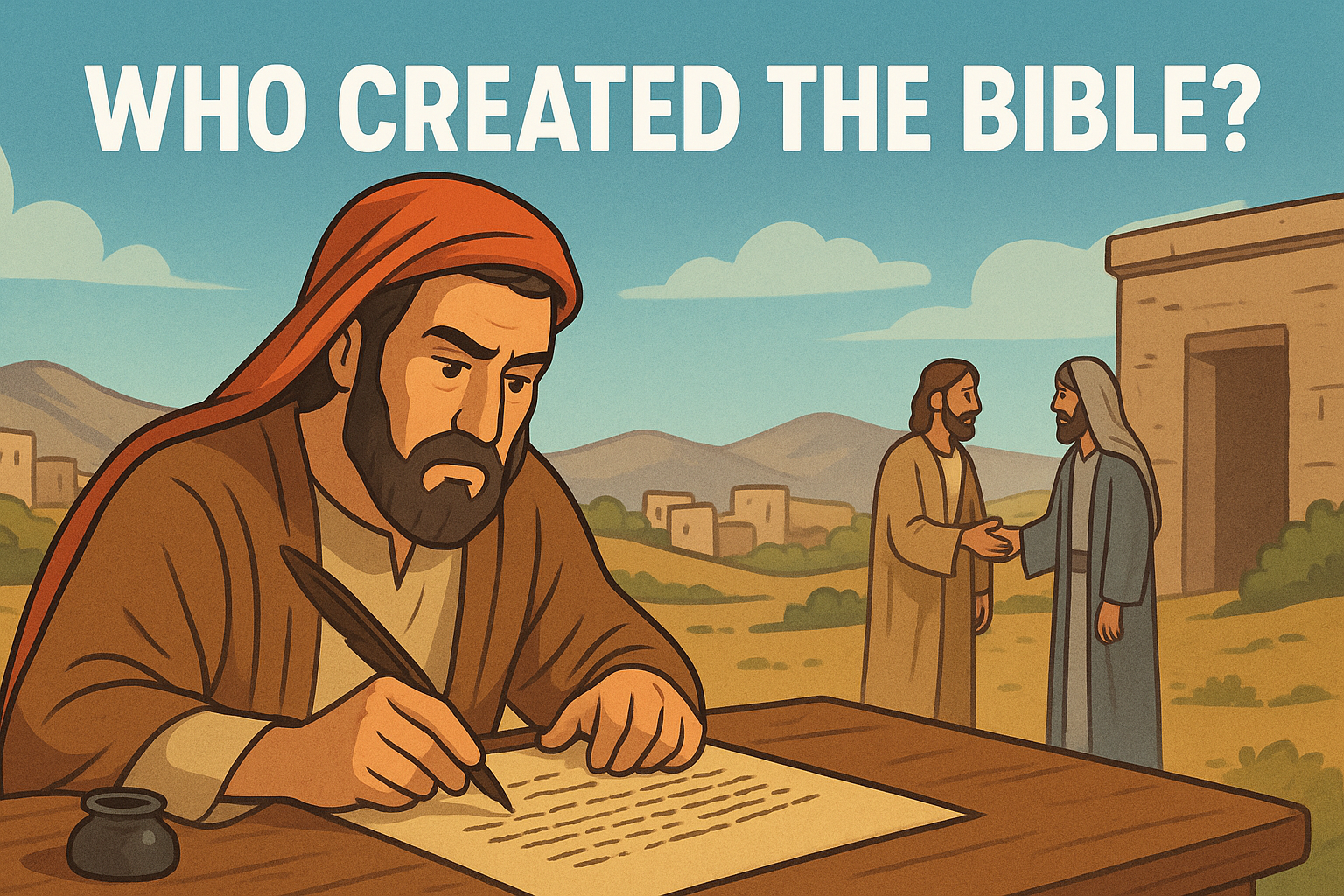
The Bible is a sacred text revered by millions around the world, serving as a guiding light for faith, morals, and spiritual understanding. Its origins are deeply rooted in history, encompassing a diverse range of authors, contexts, and timelines. In this article, we will explore who created the Bible, examining the various contributors and the divine inspiration believed to be behind its formation.
The Bible was created by numerous authors over many centuries, with the Old Testament (or Hebrew Bible) written primarily by prophets, priests, and leaders of ancient Israel. The New Testament was composed by early Christians, including apostles and disciples of Jesus Christ. Together, these texts form a cohesive narrative that reveals God’s relationship with humanity.
The Old Testament: A Collection of Writings
The Old Testament consists of multiple books, traditionally categorized into the Law, the Prophets, and the Writings. Each section reflects the experiences and beliefs of the Israelites, chronicling their history, laws, and prophecies.
The Law (Torah)
At the heart of the Old Testament is the Torah, comprising the first five books: Genesis, Exodus, Leviticus, Numbers, and Deuteronomy. These texts are traditionally attributed to Moses. According to Jewish tradition, God revealed the Law to Moses on Mount Sinai, establishing a covenant with the Israelites. This foundational narrative can be found in Exodus 19-24, where God speaks directly to Moses and the people, outlining the Ten Commandments and other laws.
The Prophets
The books of the Prophets include both major and minor prophets, such as Isaiah, Jeremiah, and Hosea. These authors were chosen by God to deliver messages of warning, hope, and guidance to the people of Israel. For example, Isaiah 1:1 states, “These are the visions that Isaiah son of Amoz saw concerning Judah and Jerusalem.” This highlights the prophetic role of the authors, who spoke on behalf of God during critical moments in Israel’s history.
The Writings
The Writings encompass a variety of literary forms, including poetry, wisdom literature, and historical accounts. Books such as Psalms, Proverbs, and Job reflect the rich spiritual and cultural life of ancient Israel. The authors of these texts, like David and Solomon, expressed deep human emotions and insights into the nature of God. Psalm 119:105 famously states, “Your word is a lamp to guide my feet and a light for my path,” illustrating the significance of God’s word in guiding believers.
The New Testament: The Life and Teachings of Jesus
The New Testament is centered on the life, death, and resurrection of Jesus Christ. It consists of the four Gospels, the Acts of the Apostles, the Epistles, and the Book of Revelation. Each of these writings contributes to the understanding of Jesus’ teachings and the early Christian community.
The Gospels
The Gospels of Matthew, Mark, Luke, and John are accounts of Jesus’ life and ministry. Each Gospel presents a unique perspective, yet they all affirm the central message of salvation through Christ. For instance, Matthew 1:1 begins with a genealogy of Jesus, emphasizing His connection to David and Abraham, fulfilling Old Testament prophecies. Mark, on the other hand, focuses on the actions of Jesus, often using the phrase “immediately” to convey urgency.
The Acts of the Apostles
Following the Gospels, the Acts of the Apostles, traditionally attributed to Luke, narrates the early church’s formation and growth. It describes the spread of the Gospel beyond Israel, highlighting the role of key figures like Peter and Paul. Acts 1:8 records Jesus’ command to His disciples: “But you will receive power when the Holy Spirit comes upon you. And you will be my witnesses, telling people about me everywhere.” This passage underscores the divine empowerment of the apostles to spread the message of Christ.
The Epistles: Letters of Instruction
The Epistles, or letters, were written by early church leaders, primarily Paul, to various Christian communities. These letters offer theological insights, moral guidance, and practical advice. For example, Romans 1:16 declares, “For I am not ashamed of this Good News about Christ. It is the power of God at work, saving everyone who believes.” This emphasizes the transformative power of the Gospel message.
Authorship and Inspiration
While the Bible has many human authors, Christians believe that it is ultimately inspired by God. This belief is rooted in passages such as 2 Timothy 3:16, which states, “All Scripture is inspired by God and is useful to teach us what is true.” This divine inspiration suggests that although human writers contributed their perspectives and experiences, God guided their thoughts and words to convey His message accurately.
Historical Context and Compilation
The process of compiling the Bible was not instantaneous. The Old Testament was largely established by the 5th century BC, while the New Testament canon was developed over the first few centuries AD. Early church leaders evaluated various texts for their authenticity and theological consistency. The Council of Carthage in 397 AD affirmed the canon of the New Testament, recognizing the texts that were widely accepted and used in worship.
Throughout history, the Bible has undergone translations and adaptations to make it accessible to diverse cultures and languages. Each translation effort, while aiming for accuracy, reflects the ongoing journey of understanding and interpreting God’s word. The commitment to preserving the Bible’s integrity is evident in the meticulous work of scribes and translators, who sought to maintain the original message while reaching new audiences.
The Influence of Tradition and Community
The creation of the Bible was not only a matter of individual authors writing in isolation but also involved the influence of community traditions and oral histories. Before the texts were written down, many stories and teachings were passed down verbally among the people. This oral tradition played a crucial role in shaping the narratives found in both the Old and New Testaments.
Community practices, such as worship and teaching, helped to affirm and preserve these oral traditions. For example, in Jewish culture, the recitation of the Torah during synagogue services ensured that the teachings remained central to the community’s identity and faith. Similarly, early Christian gatherings focused on sharing the teachings of Jesus and the apostles, which later influenced the content of the New Testament writings.
The Role of Early Church Fathers
The early church fathers were instrumental in the development and recognition of the New Testament canon. Figures like Ignatius of Antioch, Justin Martyr, and Irenaeus contributed to the theological discussions that shaped Christian doctrine. Their writings often referenced the teachings and letters of the apostles, thereby establishing a framework for what would be considered authoritative scripture.
These early leaders also faced challenges, such as heretical teachings and differing interpretations of Christian doctrine. To combat these issues, they emphasized the importance of apostolic succession, which asserted that true teaching had to be traced back to the apostles. This belief helped to validate the texts that were eventually included in the New Testament canon.
The Bible’s Impact on Culture and Society
The Bible’s creation and compilation have significantly influenced various aspects of culture and society throughout history. Its teachings have shaped moral frameworks, legal systems, and artistic expressions. Many foundational Western values, such as the importance of justice, mercy, and love, can be traced back to biblical principles.
Literature, music, and visual arts have often drawn inspiration from biblical narratives. For example, works like Dante’s “Divine Comedy” and Milton’s “Paradise Lost” reflect deep engagement with biblical themes. Additionally, hymns and contemporary Christian music often express the teachings found in Scripture, illustrating its ongoing relevance in modern worship.
The Bible in Different Cultures
The Bible has been translated into numerous languages, allowing it to reach diverse cultures around the globe. Each translation effort reflects not only a linguistic adaptation but also an engagement with the cultural context of the target audience. For instance, the translation of the Bible into languages such as Swahili, Mandarin, and Spanish has enabled millions to access its teachings in their native tongues.
Moreover, the Bible’s messages have been interpreted through various cultural lenses, leading to distinct theological perspectives. Different denominations and traditions within Christianity often emphasize certain aspects of Scripture, resulting in a rich tapestry of beliefs and practices that continue to evolve.
Questions for Reflection and Understanding
As we consider the creation of the Bible and its profound impact, several questions arise that can deepen our understanding and engagement with this sacred text:
- How do the historical contexts of the Bible’s authors influence its messages? Exploring the cultural, political, and social backgrounds of the authors can provide insight into their writings.
- What role does divine inspiration play in our interpretation of Scripture today? Reflecting on how believers understand and experience God’s guidance through the Bible can shape personal faith journeys.
- How can we engage with the Bible in a way that respects its historical and cultural contexts? Consider the importance of studying Scripture alongside historical and literary resources to gain a fuller understanding.
- In what ways can the Bible continue to impact contemporary issues? Identifying how biblical principles apply to current societal challenges can foster meaningful discussions and actions.
- How do different Christian traditions interpret the Bible? Understanding the diversity within Christianity can enrich our appreciation for the broad spectrum of beliefs and practices.
Conclusion: The Bible as a Living Document
The Bible stands as a testament to the collaborative efforts of many authors, communities, and traditions over centuries. It is both a historical document and a living text that continues to inspire and guide believers around the world. As we explore its origins and the diverse voices that contributed to its creation, we are reminded of the enduring relevance of its teachings.
Recognizing the Bible’s complex history encourages us to approach it with humility and openness, seeking to understand its messages in both their original contexts and their applications in our lives today. Ultimately, the Bible invites us into a deeper relationship with God and with one another, serving as a source of wisdom, encouragement, and transformation.
For further exploration of the Bible’s creation and its impact, consider visiting Bible Gateway or YouVersion.