
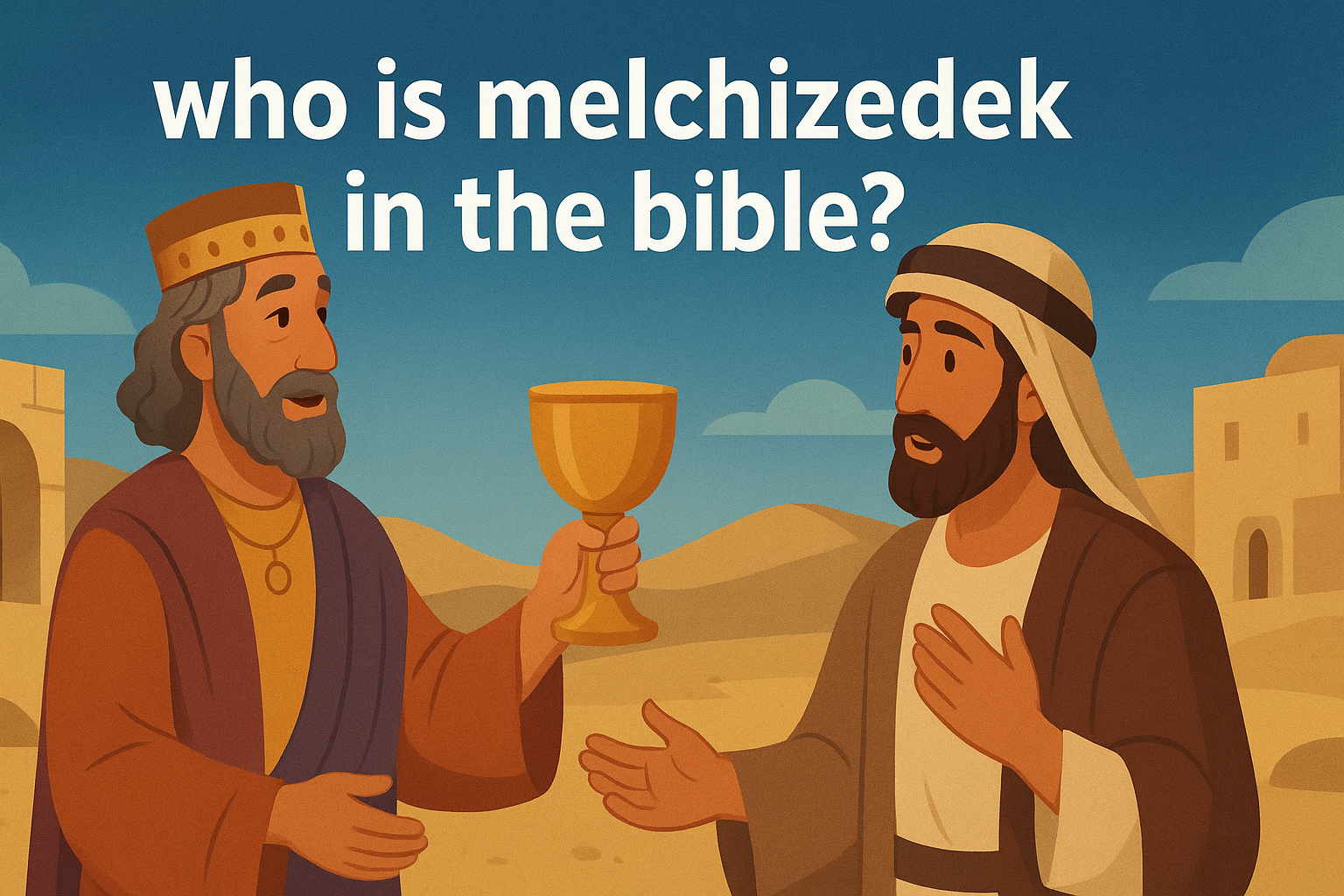
Melchizedek is one of the more enigmatic figures in the Bible, appearing briefly yet significantly within the narrative. His mention raises numerous questions about his identity, role, and the implications of his priesthood. Understanding who Melchizedek is can deepen our insight into both the Old and New Testaments, revealing layers of meaning regarding priesthood, kingship, and Christ.
Melchizedek is introduced in the Book of Genesis as the king of Salem and a priest of God Most High. He meets Abraham after a victorious battle, and their encounter is rich with theological significance. The name “Melchizedek” translates to “king of righteousness,” and he is described as both a king and a priest, a dual role that is unusual in the biblical context.
Melchizedek in Genesis
The first mention of Melchizedek occurs in Genesis 14:18-20. After Abraham defeats a coalition of kings to rescue his nephew Lot, Melchizedek comes to meet him. Here’s a brief look at this pivotal encounter:
“Then Melchizedek, king of Salem, brought out bread and wine. He was priest of God Most High, and he blessed Abram, saying, ‘Blessed be Abram by God Most High, Creator of heaven and earth. And blessed be God Most High, who delivered your enemies into your hand.’ Then Abram gave him a tenth of everything.” (Genesis 14:18-20, NLT)
In this passage, Melchizedek blesses Abraham and receives a tithe from him, which is significant for several reasons:
- Priesthood: Melchizedek’s role as a priest indicates a direct relationship with God, and his title as “priest of God Most High” emphasizes his authority in spiritual matters.
- Royalty: As king of Salem, Melchizedek combines civil and religious authority, a combination that later becomes significant in the context of Jesus’ priesthood.
- The Tithe: Abraham’s giving of a tenth to Melchizedek is an act of recognition of Melchizedek’s higher status, foreshadowing the concept of tithing in later biblical teachings.
Melchizedek in Psalm 110
Melchizedek’s significance continues in the Book of Psalms, particularly Psalm 110:4, where he is mentioned in a prophetic context:
“The Lord has sworn and will not change his mind: ‘You are a priest forever, in the order of Melchizedek.’” (Psalm 110:4, NLT)
This psalm is attributed to David and speaks of a future priest-king who will arise. The phrase “in the order of Melchizedek” indicates a unique priestly lineage that is distinct from the Levitical priesthood established later in Israel’s history. This reference is crucial because it establishes a new paradigm for priesthood, one that is eternal and not based on ancestry.
Melchizedek in the New Testament
Melchizedek’s role expands significantly in the New Testament, particularly in the Book of Hebrews. The author of Hebrews draws direct parallels between Melchizedek and Jesus Christ, emphasizing the uniqueness of Jesus’ priesthood:
“For this Melchizedek, king of Salem, priest of the Most High God, met Abraham returning from the defeat of the kings and blessed him; and Abraham gave him a tenth of everything.” (Hebrews 7:1-2, NLT)
In Hebrews 7, the author explains how Melchizedek’s priesthood is superior to the Levitical priesthood. Here are some key points made in this chapter:
- Timelessness: Melchizedek appears without any record of his genealogy, birth, or death, symbolizing an eternal priesthood. This is contrasted with the Levitical priests, who are bound by lineage and mortality.
- Greater Blessing: The author argues that the lesser (Abraham) is blessed by the greater (Melchizedek), highlighting Melchizedek’s superior status.
- Jesus as High Priest: The comparison culminates in the assertion that Jesus is a high priest “in the order of Melchizedek,” indicating that His priesthood is not derived from the Levitical line but is eternal and divine.
Theological Implications of Melchizedek
The figure of Melchizedek carries profound theological implications. His dual role as both king and priest foreshadows the messianic role of Jesus Christ, who is both sovereign and our great high priest. This duality is essential in understanding the nature of Christ’s work and His relationship to both God and humanity.
Moreover, Melchizedek represents a priesthood that transcends the law, which is a central theme in the Book of Hebrews. The law, given through Moses, established the Levitical priesthood, but Melchizedek’s priesthood signifies a new covenant, one characterized by grace and eternal life through faith in Jesus Christ.
In summary, Melchizedek serves as a pivotal figure in the biblical narrative, symbolizing a priesthood that is timeless and superior. His brief yet meaningful presence in Scripture invites believers to explore deeper themes of faith, righteousness, and the eternal nature of Christ’s sacrifice.
Melchizedek’s Legacy in Christian Tradition
Throughout Christian history, Melchizedek has been a subject of fascination and interpretation among theologians and scholars. His unique position as both king and priest has led to various theological reflections and teachings that continue to influence Christian thought today.
Early Church Fathers, such as Augustine and Origen, recognized Melchizedek’s significance as a type of Christ. They emphasized that his appearance foreshadowed the coming of Jesus, who fulfills the roles of both king and priest. This typology has been a central theme in Christian sermons and writings, reinforcing the understanding that Melchizedek is not merely a historical figure but a profound symbol of Christ’s dual nature.
Moreover, the Eucharistic implications of Melchizedek’s offering of bread and wine in Genesis have been explored extensively. Early Christians saw this as a precursor to the Last Supper and the establishment of the New Covenant through Jesus’ sacrifice. This connection has profound implications for the understanding of the sacrament of Communion, where believers partake in the body and blood of Christ, echoing the offerings of Melchizedek.
Melchizedek and Jewish Interpretation
In Jewish tradition, Melchizedek has also been viewed with significance. The Talmud and other Jewish texts reflect on his role, often emphasizing his righteousness and the importance of his priesthood. Some rabbinic interpretations suggest that Melchizedek was a historical figure representing a priestly order that existed before the establishment of the Levitical priesthood.
The Jewish understanding of Melchizedek as a righteous king and priest highlights the importance of justice and righteousness in leadership. This interpretation resonates with the broader biblical theme that leaders are called to serve both God and the people with integrity and faithfulness. Melchizedek’s legacy as a model of such leadership continues to inspire discussions about ethical governance and spiritual authority.
Melchizedek’s Role in Eschatology
Esoteric interpretations of Melchizedek have emerged within various theological frameworks, particularly concerning eschatology, the study of end times. Some scholars propose that Melchizedek represents the ideal priestly figure that will re-emerge in the eschatological future, serving as a mediator between God and humanity during the final restoration of creation. This perspective draws on the prophetic nature of his priesthood as presented in Psalm 110 and Hebrews.
This eschatological view has implications for how believers understand their own roles as priests in the New Covenant. The New Testament teaches that all believers are part of a “royal priesthood” (1 Peter 2:9), echoing Melchizedek’s dual role. This understanding encourages Christians to embrace their identity as both servants and leaders in their communities, reflecting the righteousness and justice exemplified by Melchizedek.
Questions for Further Reflection
Melchizedek’s brief appearances in Scripture invite several important questions for personal reflection and study:
- What does Melchizedek’s dual role as king and priest teach us about leadership in our own lives? Consider how these qualities can be integrated into your everyday actions and decisions.
- How does understanding Melchizedek’s significance deepen your appreciation for Jesus’ role as our high priest? Reflect on the implications of Jesus’ eternal priesthood in your personal faith journey.
- In what ways can we embody the characteristics of righteousness and justice that Melchizedek represents in our communities? Think about practical steps you can take to promote justice and righteousness in your surroundings.
- How does Melchizedek’s offering of bread and wine relate to your understanding of Communion? Explore how this connection enhances the meaning of this sacrament for you.
Conclusion: The Enduring Significance of Melchizedek
In conclusion, Melchizedek stands as a multifaceted figure whose significance transcends his brief mention in the biblical narrative. His dual identity as king and priest serves as a profound symbol of Christ, providing a lens through which believers can understand the nature of Jesus’ ministry and the implications of their own faith. The theological, historical, and ethical dimensions of Melchizedek invite ongoing exploration and reflection, encouraging Christians to embody the righteousness and justice he represents.
As we delve deeper into the mystery of Melchizedek, we are reminded that his legacy is not only tied to the past but continues to resonate in the life of the Church today. Whether through worship, ethical living, or communal service, the lessons drawn from Melchizedek’s life and role can inspire believers to pursue a faith that reflects the eternal nature of Christ’s priesthood.