
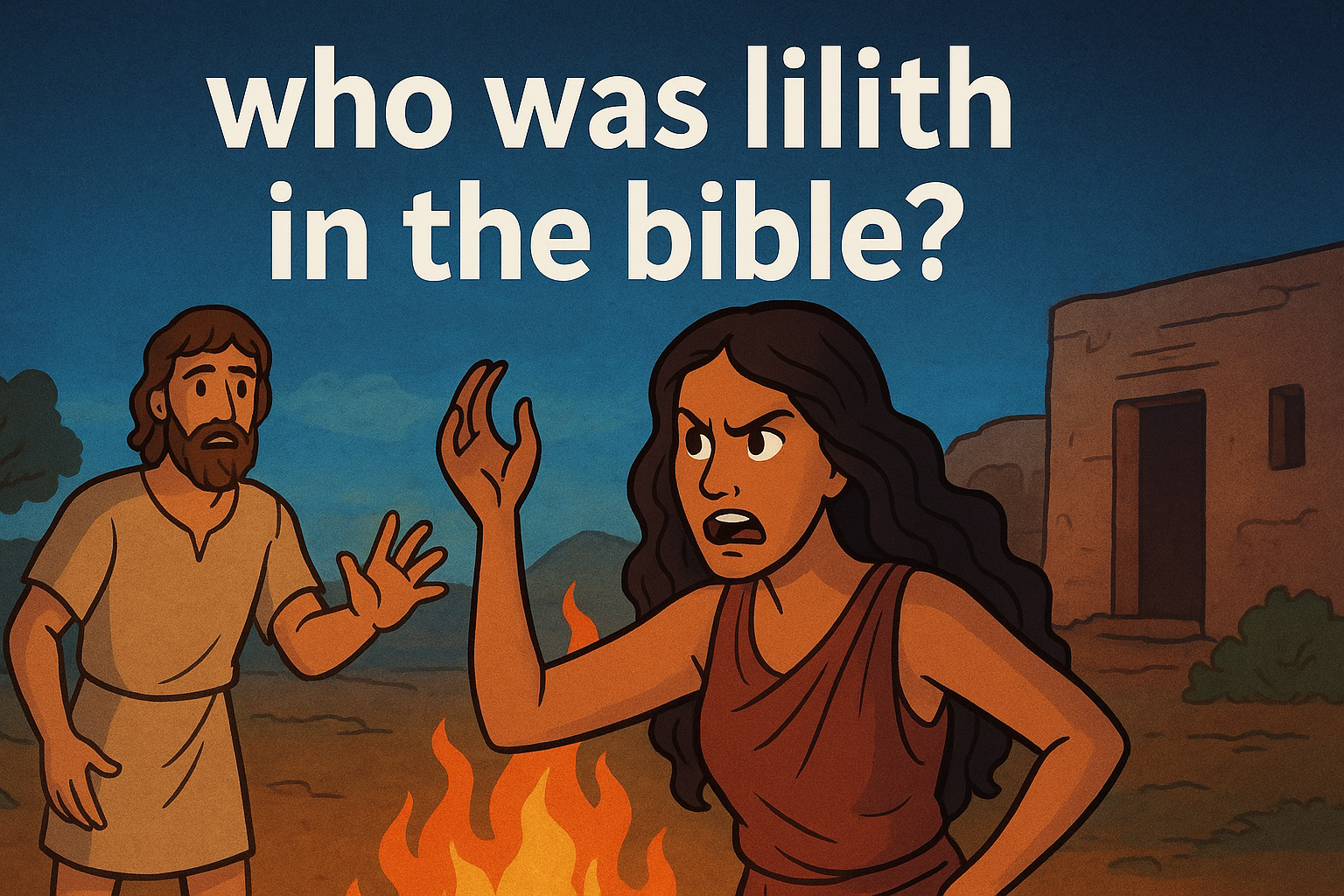
The figure of Lilith has intrigued many readers of the Bible and various religious texts. Though her name is not prominently featured in the canonical scriptures, she has become a part of Jewish folklore and mysticism. This article will explore the origins and interpretations of Lilith, examining her role and significance in biblical and extra-biblical literature.
In the Bible, Lilith is mentioned only indirectly. The most notable reference comes from the book of Isaiah, where the term “lilith” appears in a passage describing desolation and wild creatures (Isaiah 34:14). However, this reference does not provide a detailed narrative about her character or role. Instead, much of what we know about Lilith comes from later Jewish mystical texts and folklore, particularly the Babylonian Talmud and the Alphabet of Ben-Sira, a medieval text that expands on her story.
Biblical References
The mention of Lilith in Isaiah is somewhat enigmatic. The verse in question describes a wasteland where various creatures dwell, including the “lilith.” The Hebrew word “lilit” is often translated as “screech owl” or “night creature,” indicating a connection to nocturnal beings. The context of the passage speaks of desolation and abandonment, suggesting that Lilith may symbolize chaos or a cursed state.
“The desert creatures will meet with the wolves, the goat-demons will call to each other; there too, Lilith will settle and find herself a place to rest.” (Isaiah 34:14, NLT)
This reference does not provide a clear narrative but does contribute to the understanding of Lilith as a figure associated with the wild and untamed aspects of nature. The ambiguity of this passage has led to various interpretations over the centuries.
Extra-Biblical Texts
While the Bible offers limited insight, extra-biblical texts provide a more detailed portrayal of Lilith. One of the earliest references can be found in the Babylonian Talmud, where she is described as a figure who preys on newborn children and pregnant women. This portrayal aligns her with supernatural beings that threaten the vulnerable. The Talmudic writings suggest that Lilith was created alongside Adam but left him due to a disagreement over their roles in the relationship.
The Alphabet of Ben-Sira
The Alphabet of Ben-Sira, a medieval text, presents a more comprehensive narrative about Lilith. According to this story, Lilith was the first wife of Adam, created from the same soil as he was. This contrasts with Eve, who was made from Adam’s rib. The text describes how Lilith rejected Adam’s authority and sought equality in their relationship. When Adam insisted on dominance, Lilith left the Garden of Eden to assert her independence.
Her departure from Adam is significant as it symbolizes a break from traditional gender roles. Lilith’s choice to leave reflects a desire for autonomy, which has resonated with many feminist interpretations of her story. In this account, Lilith becomes a symbol of defiance against patriarchal structures.
Symbolism and Interpretations
Over the centuries, Lilith has been interpreted in various ways. In Jewish mysticism, she is often seen as a demoness associated with seduction and chaos. Some traditions view her as a figure that embodies the darker aspects of femininity. Conversely, modern interpretations have sought to reclaim Lilith as a feminist icon, representing strength and independence.
- Feminist Interpretations: Modern feminist scholars often highlight Lilith’s rejection of subservience to Adam. They view her as a symbol of women’s empowerment and autonomy.
- Demonic Associations: In some traditions, Lilith is perceived as a malevolent figure who preys on the vulnerable. This view emphasizes her connection to darkness and chaos.
- Literary Symbol: Lilith’s story has inspired various literary works, where she is often depicted as a complex character, embodying both danger and allure.
Conclusion of the First Half
In summary, Lilith’s presence in biblical literature is minimal, yet her influence extends beyond the scriptures into folklore and mythology. While the Bible mentions her in a context that suggests wildness and desolation, later texts provide a richer narrative that explores her character and significance. Whether viewed as a demoness, a symbol of independence, or a figure of chaos, Lilith remains a compelling subject of discussion in both religious and cultural contexts.
The Historical Context of Lilith
To understand Lilith’s significance, it is essential to consider the historical and cultural context in which her story developed. The ancient Near East was a region rich in mythology, and many cultures had their own interpretations of gender roles, creation, and the supernatural. As Jewish thought evolved, so did the narratives surrounding figures like Lilith. The influence of Babylonian mythology, particularly the stories of female demons such as Lilitu, likely contributed to the development of Lilith’s character in Jewish tradition.
In Babylonian lore, Lilitu was a wind spirit associated with storms and chaos, often depicted as a female demon who preyed on children. This mythological backdrop provided fertile ground for the evolution of Lilith’s character in Jewish texts, where she began to embody similar themes of danger and independence. The blending of these narratives reflects the cultural exchange that occurred in ancient times, as well as the complex nature of gender roles and societal expectations.
Gender Dynamics in Ancient Texts
In the context of ancient Near Eastern societies, women’s roles were often defined by their relationships with men. The story of Lilith, particularly her conflict with Adam, challenges these norms. By portraying a woman who asserts her independence and rejects subservience, Lilith’s narrative resonates with broader themes of female empowerment. The struggle for equality and autonomy in relationships can be seen as a reflection of the tensions present in ancient societies, where patriarchal structures dominated.
This historical lens allows contemporary readers to appreciate Lilith not merely as a figure of folklore but as a symbol of resistance against oppressive systems. Her story invites questions about the nature of gender relations and the ways in which women have sought to reclaim their voices throughout history.
Modern Interpretations and Cultural Impact
In recent years, Lilith has gained renewed interest in popular culture and feminist discourse. Various adaptations in literature, art, and media have reinterpreted her story, often emphasizing her as a symbol of strength and defiance. This shift reflects broader societal changes regarding gender equality and the ongoing conversation about women’s rights.
Modern portrayals of Lilith often depict her as a powerful figure who embraces her identity rather than shying away from it. This reclamation of Lilith’s character has inspired a variety of artistic expressions, from poetry to visual arts, where she is celebrated as a feminist icon. These interpretations encourage audiences to engage with the complexities of her story and the implications it holds for contemporary discussions about gender and power.
Questions for Reflection
As readers explore the narrative of Lilith, several questions arise that can deepen understanding and provoke thoughtful discussion:
- What does Lilith’s story reveal about the historical treatment of women in religious texts? Analyzing her narrative can provide insights into ancient perspectives on gender roles.
- How can Lilith be seen as both a figure of chaos and a symbol of empowerment? This duality invites reflection on the complexities of femininity and the ways women navigate societal expectations.
- In what ways can the story of Lilith inspire modern movements for gender equality? Considering her defiance against patriarchal norms can inform contemporary discussions about women’s rights and autonomy.
Conclusion: The Enduring Legacy of Lilith
The figure of Lilith, though only briefly mentioned in the Bible, has evolved into a rich symbol within Jewish folklore and beyond. Her story reflects the complexities of gender dynamics, cultural exchanges, and the struggle for autonomy. As a character who embodies both independence and chaos, Lilith challenges traditional narratives and invites ongoing exploration of women’s roles in both historical and modern contexts.
Her legacy continues to resonate today, inspiring discussions about empowerment, equality, and the multifaceted nature of femininity. By examining Lilith through various lenses—historical, literary, and feminist—readers can appreciate her significance not only as a mythological figure but also as a catalyst for dialogue surrounding gender and power in society.