
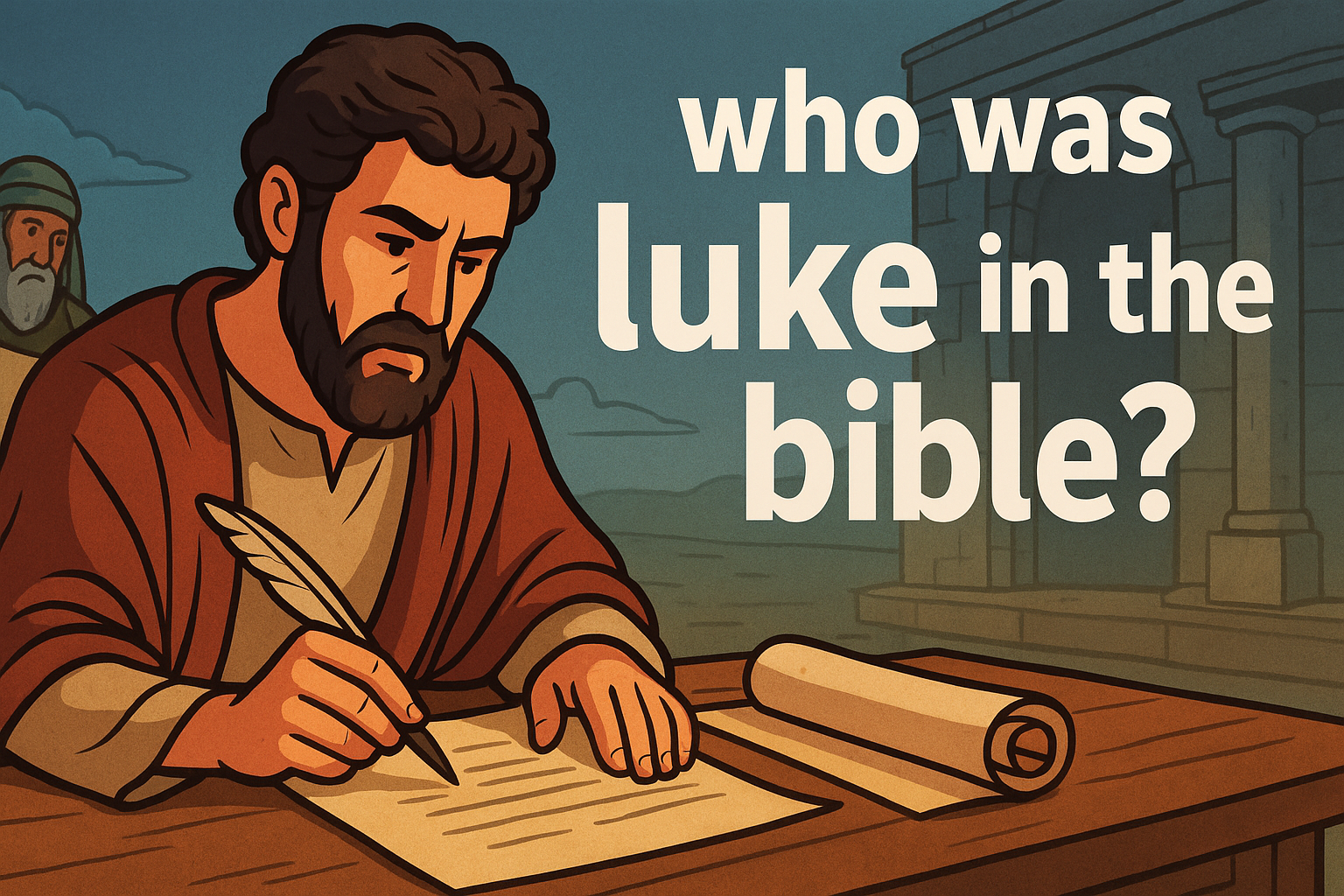
The Bible presents a rich tapestry of characters whose lives and actions played significant roles in shaping the early Christian faith. Among these figures, Luke stands out for his unique contributions as both a Gospel writer and a companion of the Apostle Paul. In this article, we will explore who Luke was, his background, his role in the New Testament, and the significance of his writings.
Luke, often referred to as the author of the Gospel of Luke and the Acts of the Apostles, is traditionally recognized as a physician and a Gentile. His writings provide a detailed account of the life, ministry, and resurrection of Jesus Christ, as well as the early church’s formation and expansion. This article will delve into the biblical evidence surrounding Luke’s identity, his contributions to the New Testament, and how he is perceived in Christian tradition.
Luke’s Background and Identity
Luke is mentioned by name in three of Paul’s letters: Colossians 4:14, 2 Timothy 4:11, and Philemon 1:24. In these passages, he is referred to as a physician, which has led many to interpret his writings with a focus on compassion and detail. Colossians 4:14 states, “Luke, the beloved physician, sends his greetings,” highlighting his close relationship with Paul and his role in the early church.
Luke is generally believed to be a Gentile, the only non-Jewish author of the New Testament. This perspective is supported by early church tradition and by the content of his writings, which often emphasize Jesus’ compassion for the marginalized, including Gentiles, women, and the poor. His unique viewpoint helps to broaden the understanding of Jesus’ ministry beyond the Jewish context.
Luke’s Role as a Gospel Writer
The Gospel of Luke is the third book in the New Testament and is part of what is known as the Synoptic Gospels, which includes Matthew and Mark. Luke’s account is distinguished by its emphasis on prayer, the Holy Spirit, and joy. He provides a detailed narrative of Jesus’ life, including events such as the Annunciation, the Nativity, and the parables that are unique to his Gospel, such as the Good Samaritan and the Prodigal Son.
Luke opens his Gospel by stating his intention to compile an orderly account of the events surrounding Jesus’ life (Luke 1:1-4). He likely had access to various sources, including the testimonies of those who were eyewitnesses of the events he describes. This dedication to accuracy and detail reflects Luke’s background as a physician, where precision is crucial.
Theological Themes in Luke’s Gospel
Several key theological themes are prominent in Luke’s Gospel. One of the most significant is the theme of salvation. Luke emphasizes that Jesus came to seek and save the lost (Luke 19:10). This theme is illustrated through various parables and stories, highlighting the inclusivity of Jesus’ message and His willingness to associate with sinners and outcasts.
Another important theme is the role of women in Jesus’ ministry. Luke includes many stories that highlight the faith and actions of women, such as Mary, the mother of Jesus, and Mary Magdalene. This focus on women demonstrates the radical nature of Jesus’ ministry, which broke social norms of the time.
Additionally, the Gospel of Luke emphasizes the work of the Holy Spirit. The Spirit’s role is evident from the beginning, with the announcement of Jesus’ birth being linked to the Holy Spirit (Luke 1:35). The Spirit’s influence continues throughout Jesus’ ministry and into the early church, as seen in the book of Acts, which Luke also authored.
Luke’s Contribution to the Acts of the Apostles
In addition to the Gospel of Luke, he is also credited with writing the Acts of the Apostles, which serves as a sequel to his Gospel. Acts chronicles the early church’s growth and the spread of the gospel message after Jesus’ ascension. It provides a historical account of the apostles, particularly Peter and Paul, and their missionary journeys.
Acts begins with Jesus’ final instructions to His disciples and the promise of the Holy Spirit (Acts 1:4-8). Luke’s narrative showcases the transformation of the disciples from fearful followers to bold proclaimers of the Gospel. This change is attributed to the empowering presence of the Holy Spirit, which is a recurring theme throughout both Luke and Acts.
Luke’s Perspective on the Early Church
Luke’s portrayal of the early church is characterized by unity, prayer, and communal living. He highlights the importance of fellowship among believers and the sharing of resources (Acts 2:44-47). The depiction of the church’s growth is not merely numerical but also spiritual, emphasizing the role of prayer and the guidance of the Holy Spirit in the believers’ lives.
Luke also documents significant events such as the Pentecost, where the Holy Spirit descends upon the apostles, empowering them to speak in different languages (Acts 2:1-4). This event marks a pivotal moment in the early church, as it signifies the beginning of the church’s mission to spread the Gospel to all nations.
Through his writings, Luke provides a comprehensive account of the early Christian movement, emphasizing its roots in Jesus’ ministry and the transformative power of the Holy Spirit. His unique perspective as a Gentile and a physician enriches the narrative and offers insights into the diverse nature of the early church.
Luke’s Influence on Christian Theology
Luke’s writings have significantly shaped Christian theology and understanding of Jesus’ message. His Gospel is often viewed as a bridge between the Old Testament prophecies and the fulfillment of those prophecies in Jesus Christ. For instance, Luke frequently references Old Testament scriptures to highlight how Jesus is the promised Messiah, fulfilling God’s covenant with His people.
Additionally, Luke portrays Jesus as the Savior for all people, not just the Jews. This universal approach is foundational for Christian theology, emphasizing that salvation through Christ is available to everyone, regardless of their background. This inclusive message resonates throughout both the Gospel of Luke and the Acts of the Apostles, making it a vital part of Christian doctrine.
Literary Style and Structure
Luke’s literary style is noteworthy for its eloquence and attention to detail. He employs a narrative technique that engages readers, often using parables and vivid imagery to convey deeper truths. His writing is marked by a sense of order and clarity, reflecting his intention to provide an accurate and comprehensive account of Jesus’ life and the early church.
The structure of Luke’s Gospel is also significant. It includes a well-defined introduction, followed by a detailed account of Jesus’ ministry, and concludes with His passion, resurrection, and ascension. This deliberate organization helps readers understand the progression of Jesus’ mission and the establishment of the church.
Historical Context and Audience
Understanding the historical context in which Luke wrote is crucial for interpreting his works. Luke is believed to have written his Gospel and Acts during a time when the early church was facing persecution and challenges. This context may explain his emphasis on the Holy Spirit’s role and the need for unity among believers.
Luke’s audience is thought to be primarily Gentile Christians, which is reflected in his approach to explaining Jewish customs and traditions. He often provides additional details that would be helpful for those unfamiliar with Jewish culture, indicating his desire to make the message of Jesus accessible to all.
Luke in Early Church Tradition
Luke’s contributions to the New Testament were recognized early in church history. Early church fathers, such as Irenaeus and Eusebius, affirmed his authorship of both the Gospel and Acts. His writings were widely circulated and accepted, reflecting the early church’s acknowledgment of their theological depth and historical accuracy.
In Christian tradition, Luke is often celebrated as the patron saint of physicians, artists, and surgeons, reflecting his background as a doctor and his role as a storyteller. His feast day is observed on October 18, highlighting the significance of his contributions to the faith.
Key Questions for Reflection
As we delve deeper into understanding Luke’s role in the Bible, several questions can guide our reflection:
- How does Luke’s portrayal of Jesus challenge or affirm your understanding of His mission?
- In what ways does Luke’s emphasis on compassion and inclusivity influence how we engage with others today?
- What can we learn from Luke’s perspective as a Gentile author regarding the universality of the Gospel message?
- How do the themes of prayer and the Holy Spirit in Luke’s writings shape our approach to spiritual life and community?
- In what ways can we embody the unity and fellowship that Luke describes in the early church in our modern contexts?
Conclusion: The Enduring Legacy of Luke
Luke stands as a pivotal figure in the New Testament, with his writings offering profound insights into the life of Jesus and the early church. His unique background as a Gentile physician allows him to present a universal message of salvation that resonates across cultures and generations. Through his detailed narratives and theological themes, Luke invites readers to explore the depths of God’s love and the transformative power of the Holy Spirit.
As we reflect on Luke’s contributions, we are reminded of the importance of compassion, inclusivity, and the call to share the Gospel with all people. His legacy continues to inspire Christians today to pursue a deeper understanding of their faith and to live out the teachings of Jesus in their daily lives.
For further exploration of Luke’s life and contributions, visit Bible Gateway and Christianity.com.