
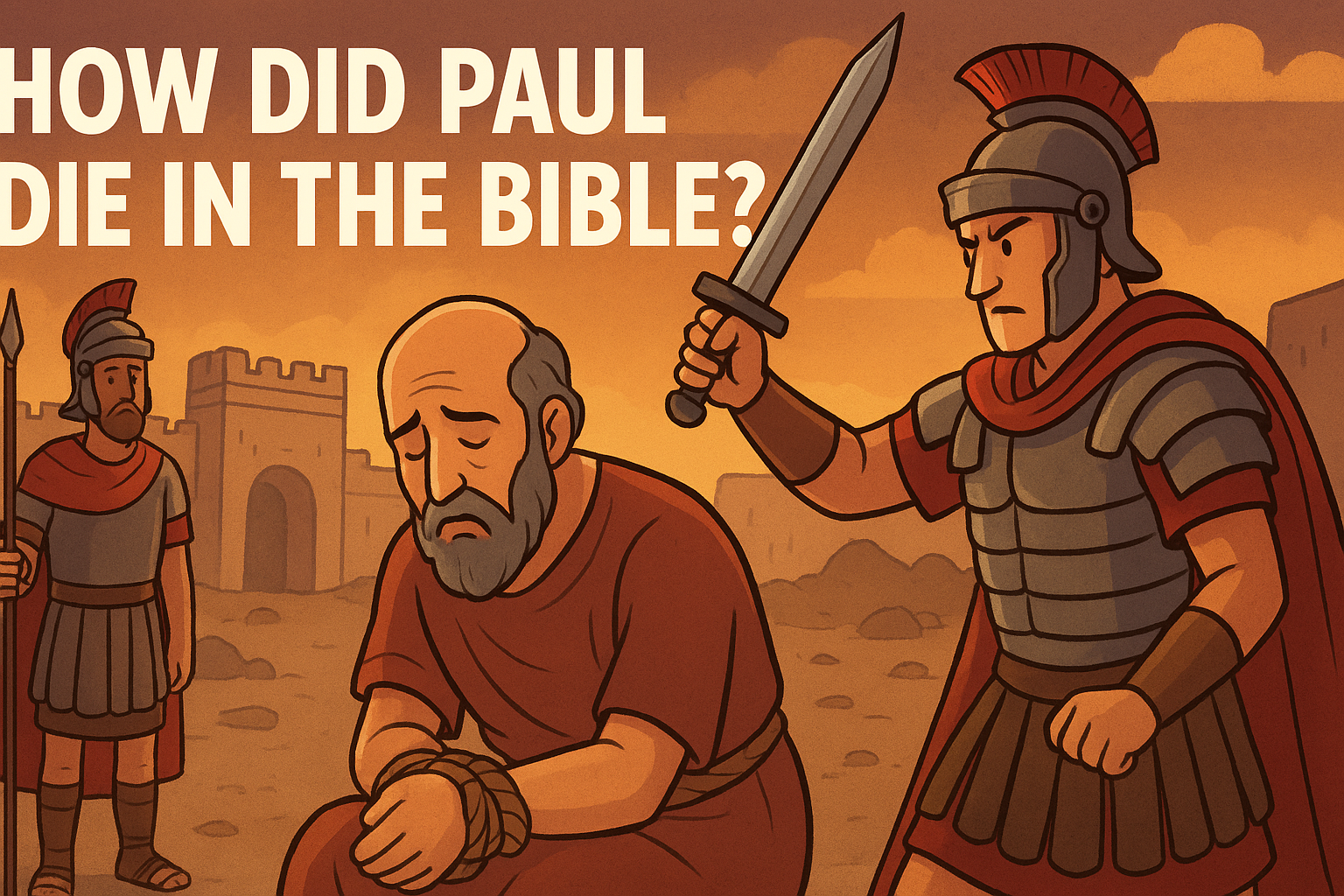
The Apostle Paul is one of the most significant figures in early Christianity, known for his missionary journeys and theological writings. However, the details surrounding his death are not explicitly outlined in the Bible. Instead, we rely on historical accounts and traditions to piece together the circumstances of his demise. This article explores the various aspects of how Paul died, drawing from biblical passages and historical context.
While the New Testament does not provide a direct account of Paul’s death, it is widely accepted that he suffered martyrdom in Rome around AD 64-68. The most common belief is that he was beheaded during the persecution of Christians under Emperor Nero. This conclusion is supported by early church tradition and writings from church historians.
Paul’s Imprisonment and Trials
To understand the context of Paul’s death, we first need to examine his later years, particularly the imprisonment mentioned in the Book of Acts. Paul was arrested in Jerusalem after being accused of bringing Gentiles into the temple, which was against Jewish law (Acts 21:27-30). Following his arrest, he was subjected to a series of trials before various leaders, including the Roman governor Felix and King Agrippa. Throughout these trials, Paul defended his faith fervently, citing his encounter with Christ and the resurrection as the foundation of his beliefs.
After appealing to Caesar, Paul was sent to Rome for trial. The Book of Acts concludes with Paul under house arrest in Rome, where he continued to preach the Gospel and teach about Jesus (Acts 28:30-31). This period of imprisonment is crucial because it sets the stage for the events leading to his death. Though the Book of Acts does not detail Paul’s fate, early church writings suggest he was released for a time before being imprisoned again, leading to his eventual execution.
Historical Accounts of Paul’s Death
While the Bible does not describe Paul’s death, several early Christian writers provide insights into how he may have died. One of the earliest accounts comes from the writings of Eusebius, a church historian from the early fourth century. Eusebius states that Paul was martyred in Rome and that he was beheaded, which aligns with the common belief in Christian tradition.
Another significant source is the “Acts of Paul,” a non-canonical text that elaborates on Paul’s life and ministry. Although this document is not considered scripture, it reflects the early church’s beliefs about Paul’s martyrdom. According to this text, Paul faced execution for his unwavering commitment to preaching the Gospel, and his death was viewed as a testament to his faith.
Understanding Martyrdom in Early Christianity
To fully appreciate the significance of Paul’s death, it is essential to understand the context of martyrdom in early Christianity. The early Christians often faced persecution for their beliefs, particularly under Roman rule. This persecution intensified during the reign of Emperor Nero, who is infamously known for blaming Christians for the Great Fire of Rome in AD 64. Under Nero, many Christians were tortured and executed, making it a perilous time for those who proclaimed the faith.
Paul’s willingness to face death for his beliefs exemplifies the commitment and courage of early Christians. His martyrdom served as an inspiration for countless others who would follow in his footsteps, affirming their faith even in the face of death. The New Testament reflects this spirit of perseverance; for example, in 2 Timothy 4:6-8, Paul himself expresses readiness to face the end of his life, stating, “For I am already being poured out like a drink offering, and the time for my departure is near. I have fought the good fight, I have finished the race, I have kept the faith.” This passage highlights his unwavering dedication to Christ until the very end.
Tradition and Legacy
Tradition holds that Paul was buried outside the walls of Rome, and many believe that his burial site is located at the Basilica of Saint Paul Outside the Walls, a significant pilgrimage site today. The legacy of Paul’s life and teachings continues to influence Christianity profoundly. His letters form a substantial part of the New Testament and provide foundational theological insights that shape Christian doctrine.
In summary, while the Bible does not provide a detailed account of Paul’s death, historical tradition and writings suggest he was martyred in Rome, likely by beheading, around the time of Nero’s persecution of Christians. His life and eventual death serve as a powerful testament to his faith and commitment to spreading the message of Jesus Christ.
Theological Implications of Paul’s Death
Paul’s death is not only a historical event but also carries significant theological implications for Christianity. His martyrdom represents the ultimate sacrifice for one’s faith, embodying the teachings of Jesus about self-denial and taking up one’s cross (Matthew 16:24). Paul’s willingness to endure suffering and death for the sake of the Gospel highlights the transformative power of faith and the call to discipleship. His life and death serve as a reminder of the cost of following Christ, which is a central theme in Christian teaching.
Additionally, Paul’s martyrdom affirms the belief in eternal life through Christ. In his letters, Paul often speaks of the hope of resurrection and eternal glory (Romans 8:18). His death can be seen as a fulfillment of this hope, where he transitions from earthly suffering to eternal reward. This belief in resurrection not only comforted Paul but continues to inspire Christians today, encouraging them to persevere in their faith despite challenges.
Paul’s Influence on Early Church Perceptions of Martyrdom
Paul’s martyrdom significantly influenced the early church’s understanding of martyrdom and its importance in Christian identity. Early Christians viewed martyrs as witnesses to the faith, and Paul’s life exemplifies this notion. His teachings and his willingness to die for his beliefs helped shape the church’s view of suffering and sacrifice as integral to the Christian experience.
Moreover, Paul’s letters often addressed the struggles faced by the early church, providing encouragement and exhortation to remain steadfast in their faith during persecution. Passages such as Philippians 1:29, where he states that it has been granted to believers not only to believe in Christ but also to suffer for his sake, reflect how martyrdom was a celebrated aspect of faith. The church’s reverence for Paul as a martyr contributed to the development of a rich tradition of honoring those who died for their faith, influencing the way Christians remember and celebrate martyrs throughout history.
The Role of Paul’s Writings in Shaping Christian Martyrdom Narratives
Paul’s epistles have played a crucial role in shaping the narratives surrounding martyrdom in Christianity. His letters address themes of suffering, perseverance, and hope, providing a theological framework that supports the understanding of martyrdom as a noble and honorable end. For instance, in 2 Corinthians 4:8-9, Paul writes about being “hard pressed on every side, but not crushed; perplexed, but not in despair.” This sentiment resonates with many who face persecution, reinforcing the belief that suffering can lead to deeper faith and spiritual growth.
The narratives of Paul’s life and death have also inspired countless stories of martyrs throughout Christian history. His example has been a source of encouragement for those facing persecution, as many have drawn strength from his unwavering faith. The stories of martyrs echo Paul’s experiences, affirming the belief that faith can triumph over adversity, a theme that remains relevant in the modern world.
Questions for Reflection and Application
As we contemplate the life and death of Paul, it is essential to consider how his example can inspire our own faith journeys. Here are some reflective questions to ponder:
- What does Paul’s commitment to his faith teach us about facing challenges in our own lives?
- How can we apply Paul’s teachings on perseverance and hope in our daily struggles?
- In what ways can we honor the legacy of martyrs like Paul in our faith communities today?
- How does understanding the historical context of Paul’s death enrich our appreciation of his writings?
- What does the concept of martyrdom mean for modern Christians, and how can we be mindful of those who suffer for their faith around the world?
Conclusion: The Enduring Legacy of Paul’s Martyrdom
In conclusion, while the Bible does not provide a detailed account of how Paul died, the historical context, early church traditions, and theological implications surrounding his martyrdom offer profound insights into his life and legacy. Paul’s unwavering commitment to the Gospel, even in the face of death, serves as an inspiration for Christians throughout the ages. His life and writings continue to challenge believers to live with faith, courage, and a willingness to endure hardships for the sake of Christ.
As we reflect on Paul’s death, we are reminded of the call to live out our faith boldly and to support those who face persecution for their beliefs. The story of Paul is not just a tale of a martyr; it is a powerful testament to the transformative love of Christ and the hope of resurrection that awaits all believers.