
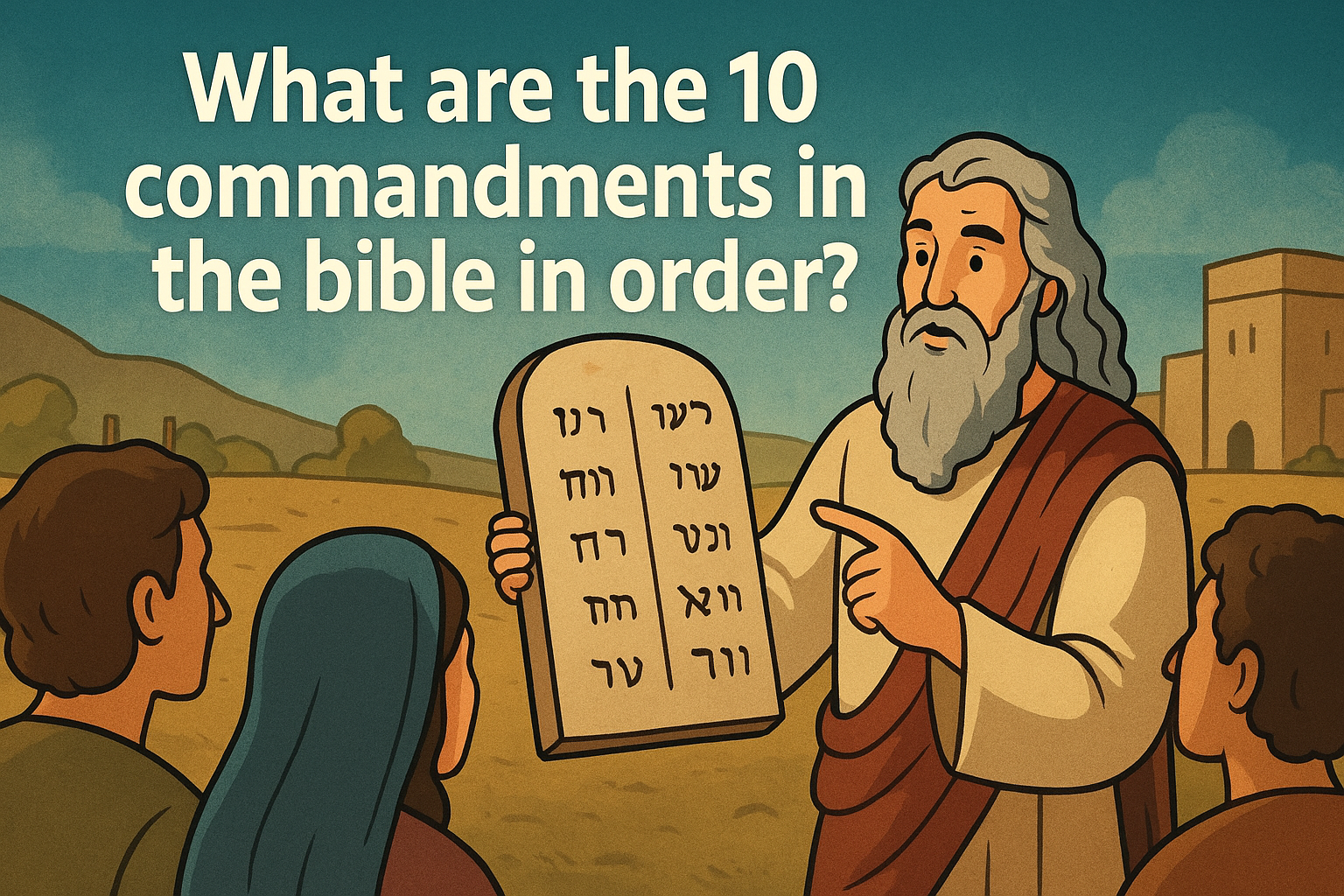
The Ten Commandments are a foundational element of Judeo-Christian ethics and morality. They serve as a guide for living a life that is pleasing to God and beneficial to others. These commandments were given to the Israelites by God through Moses on Mount Sinai, as recorded in the books of Exodus and Deuteronomy. Understanding each commandment helps us grasp the essence of God’s law and its relevance to our lives today.
Here, we will discuss the Ten Commandments as presented in the Bible, providing their order and a brief explanation of each.
1. You Shall Have No Other Gods Before Me
The first commandment emphasizes the exclusive worship of God. Found in Exodus 20:3, it states, “You must not have any other god but me.” This commandment calls believers to prioritize their relationship with God above all else, rejecting idolatry and false gods. It sets the tone for the entire set of commandments, highlighting the importance of loyalty and devotion to the one true God.
2. You Shall Not Make for Yourself a Graven Image
The second commandment, found in Exodus 20:4-5, warns against the creation and worship of idols. It reads, “You must not make for yourself an idol of any kind.” This commandment prohibits not only the worship of physical idols but also the representation of God in any form, emphasizing that God is spirit and should not be confined to human understanding or images. It teaches that worship must be directed to God alone, in spirit and truth.
3. You Shall Not Take the Name of the Lord Your God in Vain
The third commandment, located in Exodus 20:7, instructs believers to respect God’s name. It states, “You must not misuse the name of the Lord your God.” This commandment warns against using God’s name casually or disrespectfully, which includes swearing or making false oaths. It underscores the sanctity of God’s name and the importance of honoring it in our speech and actions.
4. Remember the Sabbath Day, to Keep It Holy
The fourth commandment, found in Exodus 20:8-11, calls for a day of rest. It instructs, “Remember to observe the Sabbath day by keeping it holy.” God established the Sabbath as a day of rest and worship, reflecting on His creation and the importance of taking time to recharge spiritually and physically. This commandment encourages believers to set aside regular time for rest and communion with God.
5. Honor Your Father and Your Mother
The fifth commandment, located in Exodus 20:12, emphasizes the importance of family relationships. It states, “Honor your father and mother.” This commandment calls for respect, obedience, and care for one’s parents, recognizing their role in our lives. Honor is not only a matter of respect but also involves actively supporting and caring for them, particularly as they age.
6. You Shall Not Murder
The sixth commandment, found in Exodus 20:13, prohibits the act of murder. It simply states, “You must not murder.” This commandment affirms the sanctity of human life and the value of each person as created in God’s image. It serves as a reminder that anger and hatred can lead to destructive actions and calls for reconciliation and love among individuals.
7. You Shall Not Commit Adultery
The seventh commandment, located in Exodus 20:14, addresses the sanctity of marriage. It states, “You must not commit adultery.” This commandment underscores the importance of faithfulness in marriage and the harm caused by infidelity. It calls for purity and commitment in relationships, promoting the well-being of families and society as a whole.
8. You Shall Not Steal
The eighth commandment, found in Exodus 20:15, prohibits theft. It reads, “You must not steal.” This commandment emphasizes respect for others’ property and the importance of honesty in all dealings. It calls for integrity and fairness, reminding us that taking what belongs to someone else is not only wrong but also a violation of trust.
9. You Shall Not Bear False Witness Against Your Neighbor
The ninth commandment, located in Exodus 20:16, speaks to the importance of truthfulness. It states, “You must not testify falsely against your neighbor.” This commandment prohibits lying or spreading falsehoods about others, emphasizing the value of honesty and integrity in relationships. It encourages a culture of trust and accountability within the community.
10. You Shall Not Covet
The tenth commandment, found in Exodus 20:17, addresses the issue of desire. It states, “You must not covet your neighbor’s house. You must not covet your neighbor’s wife, male or female servant, ox or donkey, or anything else that belongs to your neighbor.” This commandment warns against the internal feelings of envy and greed that can lead to harmful actions. It teaches the importance of contentment and gratitude for what one has, rather than longing for what belongs to others.
The Context of the Ten Commandments
The Ten Commandments were given to the Israelites in a specific historical and cultural context. After their liberation from slavery in Egypt, the Israelites found themselves in a wilderness, needing guidance on how to live as a free people. The commandments served as a covenant between God and His people, establishing a moral foundation as they prepared to enter the Promised Land. This context highlights the importance of obedience and the relationship between God and His people.
Understanding the commandments within their historical setting allows us to see that they were not just arbitrary rules but rather principles that would help to shape a just and peaceful society. The Israelites were transitioning from a life of oppression to one of self-governance, and these commandments provided essential ethical guidelines to foster community and cooperation.
The Relevance of the Ten Commandments Today
Even though the Ten Commandments were given thousands of years ago, their principles remain relevant in contemporary society. They address fundamental aspects of human behavior and relationships that are timeless. For example, the call to honor parents, the prohibition against murder, and the emphasis on honesty resonate with universal values upheld in many cultures.
In a world increasingly marked by division and conflict, the commandments offer a pathway to reconciliation and harmony. They encourage individuals to reflect on their actions and their impact on others, fostering a mindset of love, respect, and accountability. Believers often look to these commandments as a moral compass, guiding their decisions and interactions.
Exploring the Commandments in Christian Theology
In Christian theology, the Ten Commandments are seen as a precursor to the teachings of Jesus Christ. Jesus emphasized the spirit of the law over mere adherence to rules. For instance, in the New Testament, He taught that anger toward a brother is akin to murder, and lustful thoughts are equivalent to adultery (Matthew 5:21-30). This interpretation expands the commandments from external actions to internal attitudes, urging believers to cultivate purity of heart and mind.
The commandments also highlight humanity’s need for grace. Christians believe that no one can perfectly keep the law, which is why the message of grace through faith in Jesus is central to the faith. This understanding encourages believers to rely on God’s mercy while striving to live according to His will.
Questions for Reflection
- How do the Ten Commandments influence your daily life and decision-making?
- In what ways can you apply the principles of the commandments to strengthen your relationships with others?
- How do you understand the relationship between the commandments and the teachings of Jesus?
- What steps can you take to promote a culture of honesty and integrity in your community?
Teaching the Ten Commandments to Future Generations
Passing down the significance of the Ten Commandments to future generations is essential for nurturing moral values and ethical behavior. Families, churches, and communities play a crucial role in this process. Engaging children and young people in discussions about the commandments can help them understand their importance and relevance.
Creative teaching methods can enhance understanding, such as storytelling, role-playing, and community service projects that embody the commandments’ principles. Encouraging questions and open dialogue about the commandments can foster critical thinking and personal application, helping young people internalize these values.
Conclusion: A Call to Action
The Ten Commandments remain a vital part of the moral landscape, offering guidance for personal conduct and community relationships. They challenge us to live with integrity, respect, and love for one another. As we reflect on their meaning and implications, let us commit to embodying these commandments in our daily lives. By doing so, we not only honor God but also contribute to a more just and compassionate world.