
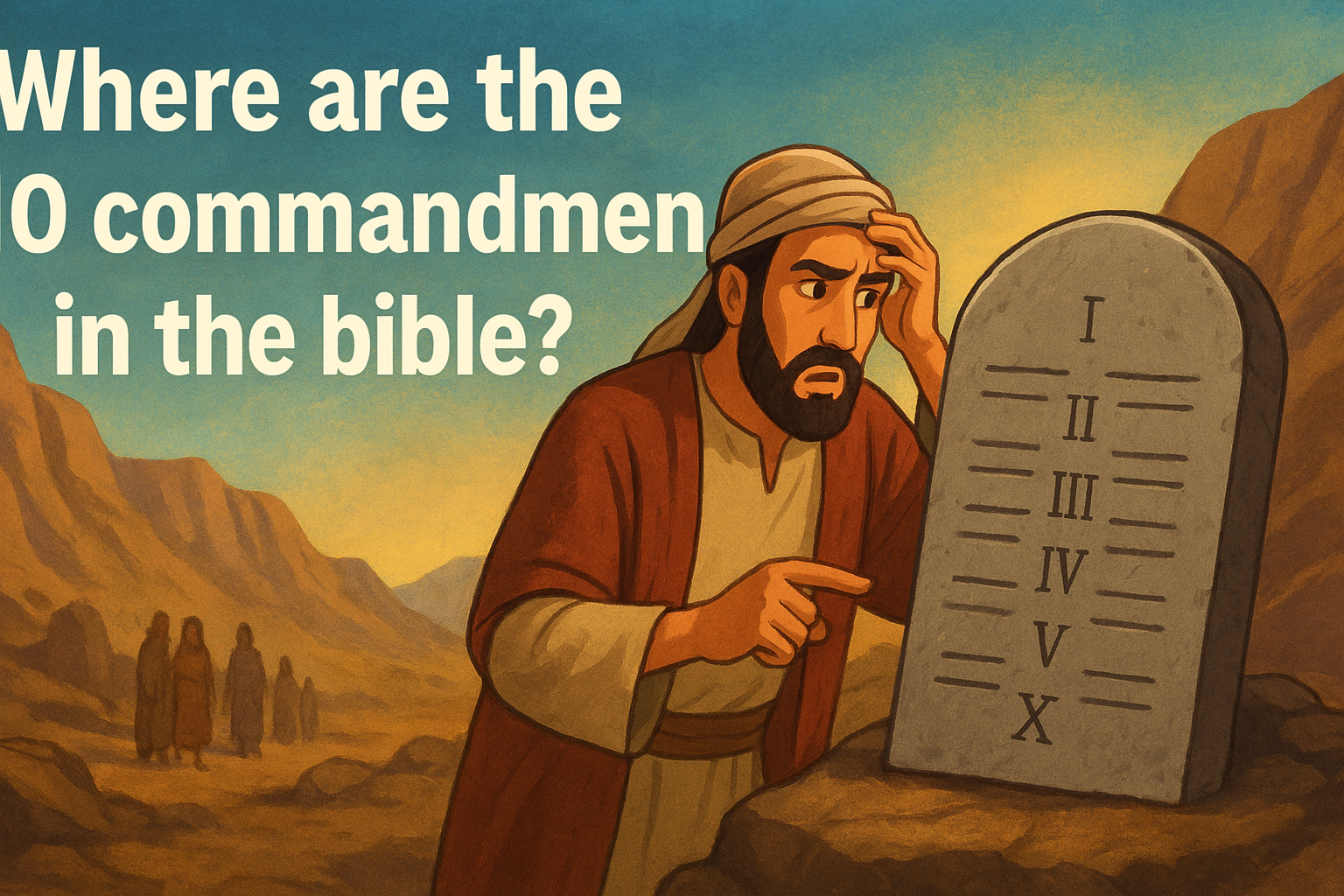
The Ten Commandments are fundamental principles that form a crucial part of the moral and ethical framework in the Judeo-Christian tradition. They are often seen as God’s covenant with His people, providing guidelines for living a life that honors Him and respects others. This article will explore where the Ten Commandments can be found in the Bible, their significance, and the context in which they were given.
The Ten Commandments are primarily located in two specific books of the Bible: Exodus and Deuteronomy. These commandments were given to the Israelites after their exodus from Egypt, and they serve as a foundation for the laws that govern their relationship with God and each other.
Exodus: The First Account of the Ten Commandments
The first account of the Ten Commandments can be found in the book of Exodus, specifically in Exodus 20:1-17. This passage occurs shortly after the Israelites were freed from slavery in Egypt and received at Mount Sinai. In this dramatic context, God speaks directly to the people and provides them with His commandments.
“Then God gave the people all these instructions: ‘I am the Lord your God, who rescued you from the land of Egypt, the place of your slavery.’” (Exodus 20:1-2, NLT)
Understanding the Commandments in Exodus
In Exodus 20, the commandments are divided into two distinct sections: the first four commandments focus on the relationship between God and humanity, while the last six address relationships among people. Here’s a summary of each commandment:
- 1. No other gods: You shall have no other gods before Me.
- 2. No idols: Do not make any idols or images for worship.
- 3. Misuse of God’s name: Do not misuse the name of the Lord your God.
- 4. Sabbath day: Remember the Sabbath and keep it holy.
- 5. Honor your parents: Honor your father and mother.
- 6. Do not murder: You must not murder.
- 7. Do not commit adultery: You must not commit adultery.
- 8. Do not steal: You must not steal.
- 9. Do not bear false witness: You must not testify falsely against your neighbor.
- 10. Do not covet: You must not covet your neighbor’s possessions.
The significance of these commandments in Exodus lies in their role as a legal and moral code that was meant to guide the Israelites in their new life as a free people. They emphasize the importance of monotheism, ethical behavior, and community responsibility.
Deuteronomy: The Second Account of the Ten Commandments
The second account of the Ten Commandments appears in Deuteronomy 5:4-21. This book is essentially a series of speeches given by Moses as the Israelites prepare to enter the Promised Land. In this context, Moses reiterates the commandments to remind the people of their covenant with God.
“The Lord spoke these words to all of you assembled there at the mountain. He spoke with a loud voice from the heart of the fire, the cloud, and the deep darkness, and he added nothing more.” (Deuteronomy 5:22, NLT)
The Purpose of Reiteration in Deuteronomy
The repetition of the commandments in Deuteronomy serves several purposes:
- Reminder: It reminds the Israelites of their history and the importance of obedience to God.
- Preparation: It prepares them for life in the Promised Land, emphasizing the need for a strong moral foundation.
- Clarification: It provides a chance to clarify any misunderstandings and ensure that the commandments are well understood.
Moses emphasizes that these commandments are not just rules but a way of life that reflects their relationship with God. The repetition also highlights the continuity of God’s expectations for His people throughout generations.
Significance of the Ten Commandments
The Ten Commandments hold immense significance in both Judaism and Christianity. They are often viewed as a moral compass that guides ethical behavior and societal norms. Many legal systems around the world draw inspiration from these commandments, reflecting their enduring relevance in contemporary society.
Moreover, the commandments serve as a reminder of God’s character and His desire for His people to live in harmony with Him and one another. They challenge believers to examine their lives and align their actions with these timeless principles.
In summary, the Ten Commandments can be found in Exodus 20:1-17 and Deuteronomy 5:4-21. These passages highlight God’s covenant with the Israelites and establish a moral foundation that continues to resonate today. Understanding where the commandments are located and their context enriches our appreciation of their significance in the biblical narrative.
Contextual Background of the Ten Commandments
To fully appreciate the Ten Commandments, it is essential to consider the historical and cultural context in which they were given. The Israelites had just escaped centuries of slavery in Egypt, and they were in a transitional phase, moving from oppression to freedom. This liberation was not merely a physical escape; it was also a spiritual awakening. The commandments served as a guide for how to live as a free people in relationship with God and each other.
The setting of Mount Sinai, where the commandments were delivered, is significant. It symbolizes a sacred space where God meets His people. The dramatic elements of thunder, lightning, and smoke highlight the seriousness of the moment. God was establishing His authority and the covenant relationship with His people, emphasizing that their freedom came with responsibilities.
The Role of Moses
Moses played a crucial role in this narrative. As the chosen leader and mediator, he not only conveyed God’s message but also helped the Israelites understand the importance of obedience. His leadership was pivotal in guiding the people through their journey in the wilderness. Moses’ reminders of the commandments in Deuteronomy were meant to reinforce their significance as the Israelites prepared to enter the Promised Land.
Different Interpretations of the Ten Commandments
Throughout history, various religious traditions have interpreted the Ten Commandments in different ways. In Christianity, they are often seen as moral imperatives that reflect God’s will for humanity. In Judaism, the commandments are part of a broader legal system known as Halakha, which governs all aspects of life.
One notable difference lies in the numbering of the commandments. For example, the Catholic Church and the Lutheran tradition combine the first two commandments into one, focusing on the prohibition of idolatry, while Reformed traditions keep them separate. This variation underscores the importance of understanding the commandments within the specific theological framework of each tradition.
Relevance to Modern Life
The Ten Commandments remain relevant today, serving as a moral foundation for many individuals and communities. They offer timeless principles that encourage ethical behavior and social justice. For instance, the commandment to honor one’s parents emphasizes the importance of family and respect for authority, which is a cornerstone of societal stability.
Moreover, the prohibition against stealing, lying, and committing adultery speaks to the need for trust and integrity in relationships. These commandments challenge believers to reflect on their conduct and strive for a life that aligns with God’s standards.
Follow-Up Questions for Reflection
To deepen understanding and application of the Ten Commandments, consider the following questions:
- How do the Ten Commandments influence your daily decision-making? Reflect on specific situations where these commandments guide your actions.
- In what ways can you promote the values of the commandments within your community? Think about your role in fostering ethical behavior among peers.
- How can understanding the historical context of the commandments enhance your faith? Consider how the background of the commandments shapes your view of God’s expectations.
- What does it mean to you personally to have a covenant relationship with God? Explore how this relationship influences your moral choices.
Conclusion: The Enduring Legacy of the Ten Commandments
The Ten Commandments are not merely ancient laws; they represent a living testament to God’s desire for humanity to live in harmony with Him and each other. Found in Exodus 20 and Deuteronomy 5, these commandments provide a moral compass that transcends time and culture. They remind believers of their responsibilities and the importance of living a life that reflects God’s character.
As we engage with these commandments, we are invited to reflect on their significance and apply their principles in our lives. By doing so, we honor the covenant established by God and contribute to a more just and compassionate world.